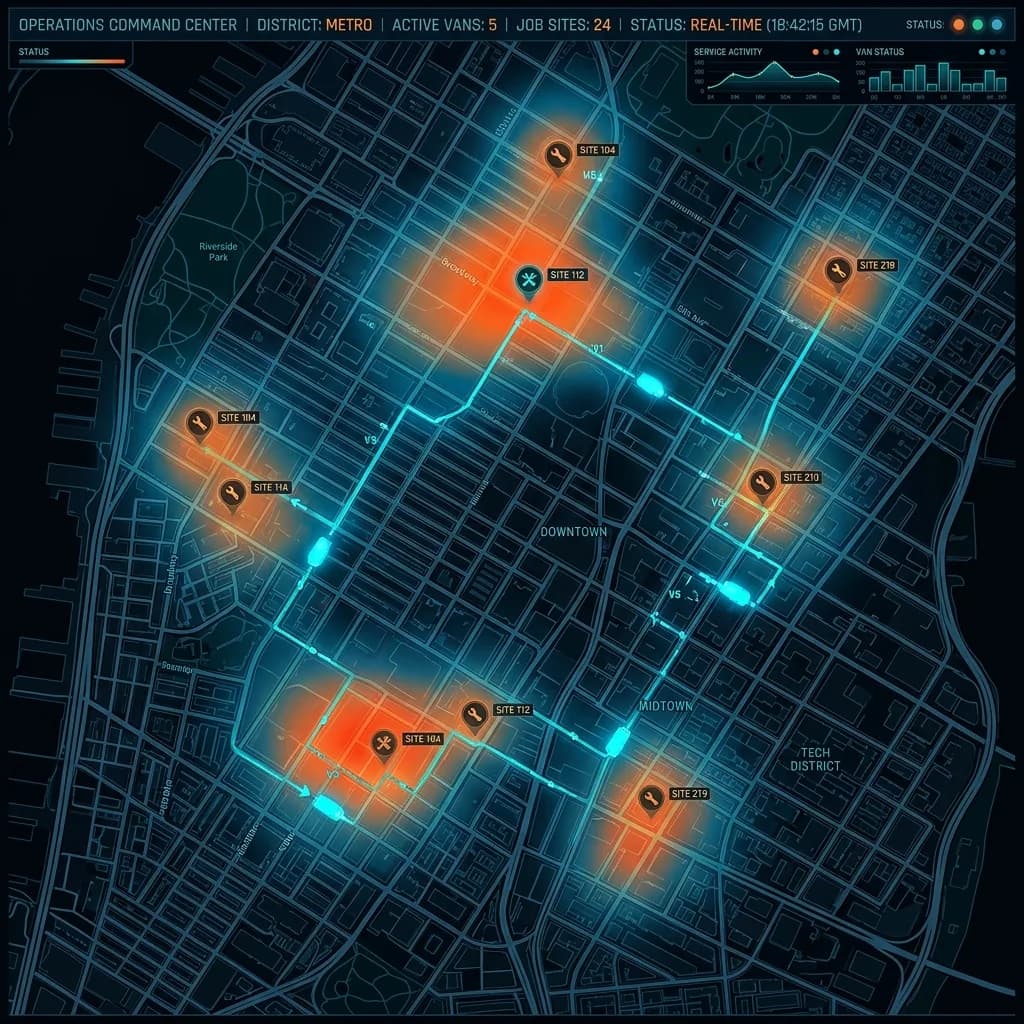
Your technicians spend 35-45% of their day driving between jobs. AI dispatch optimization cuts this to 20-28%, turning a 3-4 job day into a 5-7 job day - without hiring anyone. That's 30-50% more revenue per technician.
Every service business - HVAC, plumbing, electrical, pest control, cleaning, landscaping - shares the same fundamental constraint: each technician can only complete a limited number of jobs per day. The variable isn't how fast they work. It's how much time they waste getting between jobs.
The Hidden Cost of Manual Dispatch
Manual dispatch - where a coordinator looks at a whiteboard or spreadsheet and assigns jobs based on gut feel - creates three categories of waste:
- Geographic waste - Sending a tech from the north side to the south side, then back to the north side.
- Skill mismatch waste - Sending a junior tech to a complex job that requires a callback from a senior tech.
- Gap waste - 45-minute gaps between jobs where the tech is sitting in their truck waiting.
How AI Routing Works
AI-powered dispatch doesn't just optimize routes - it optimizes the entire operational equation simultaneously:
- Real-time traffic integration - Routes adjust dynamically based on current conditions, not yesterday's average.
- Multi-stop optimization - The algorithm considers all pending jobs and all available techs to find the global optimum, not just the next-best assignment.
- Priority weighting - Emergency calls automatically bump schedules. VIP customers get preferred windows. Revenue-weighted jobs get priority sequencing.
Skill-Based Assignment
Sending the wrong tech costs you twice - once for the failed visit, and again for the return trip with the right tech. AI skill-matching eliminates this by tracking:
- Certifications and specializations per technician
- Job complexity ratings and required tools/parts
- Historical performance data (which tech has the highest first-time fix rate for which job types)
- Current truck inventory (does the assigned tech have the right parts?)
The result: first-time fix rates jump from 65-72% to 85-92%, which means fewer return visits, happier customers, and more billable hours.
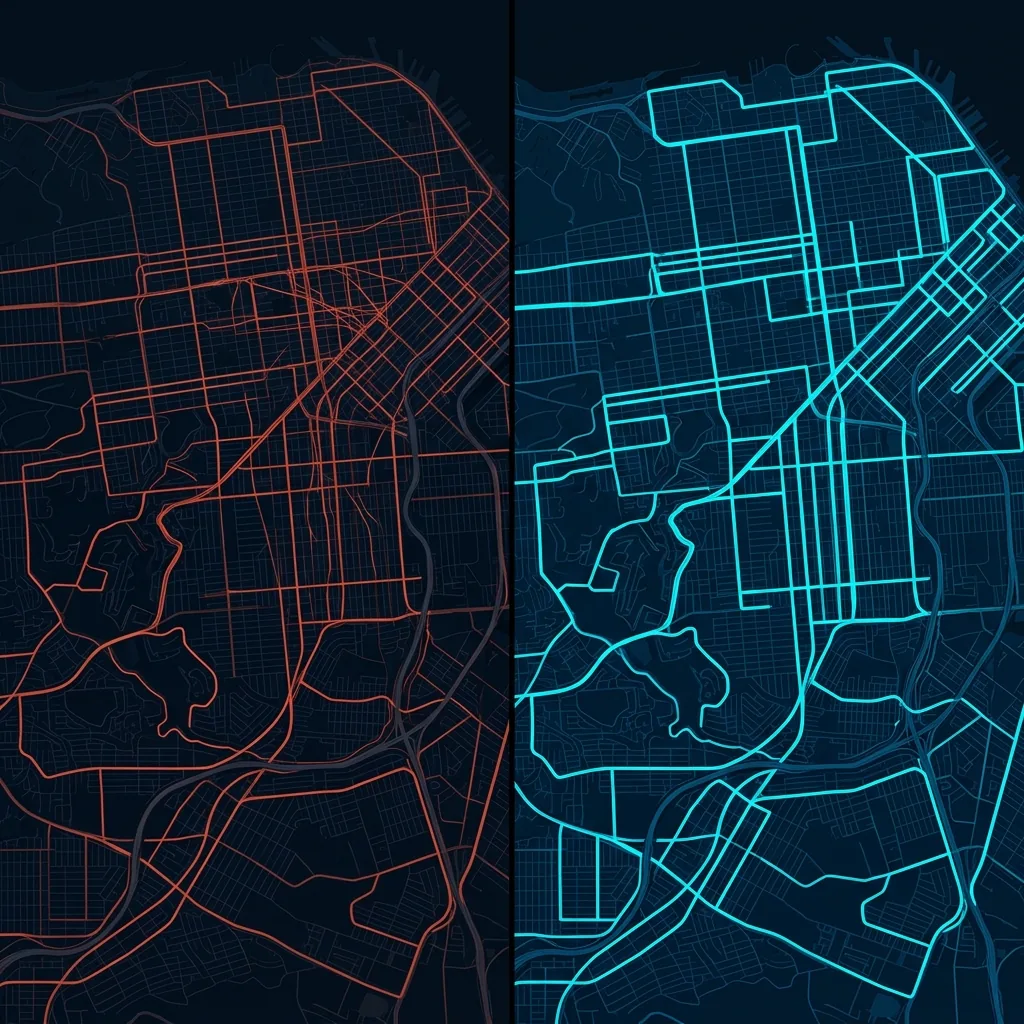
Real-Time Schedule Optimization
Schedules break every single day. Customers cancel, jobs run long, emergency calls come in. With manual dispatch, every disruption creates a cascade of phone calls and re-scheduling.
AI dispatch handles disruptions automatically:
- Cancellation detected → Schedule gap identified → Next-closest available job inserted → Tech notified → Customer confirmed
- Job running long → Downstream appointments automatically notified with updated ETAs → Schedule re-sequenced to minimize total delay
- Emergency call → Priority assessment → Best-positioned available tech rerouted → Original schedule backfilled
The Revenue Impact
| Metric | Before (Manual) | After (AI Dispatch) | Impact |
|---|---|---|---|
| Jobs/Tech/Day | 3.2 | 5.8 | +81% |
| Drive Time | 42% of day | 24% of day | -43% |
| First-Time Fix | 68% | 89% | +31% |
| Revenue/Tech/Month | $12,800 | $18,900 | +48% |
| Customer Wait Time | 4-6 hours | 1-2 hours | -67% |
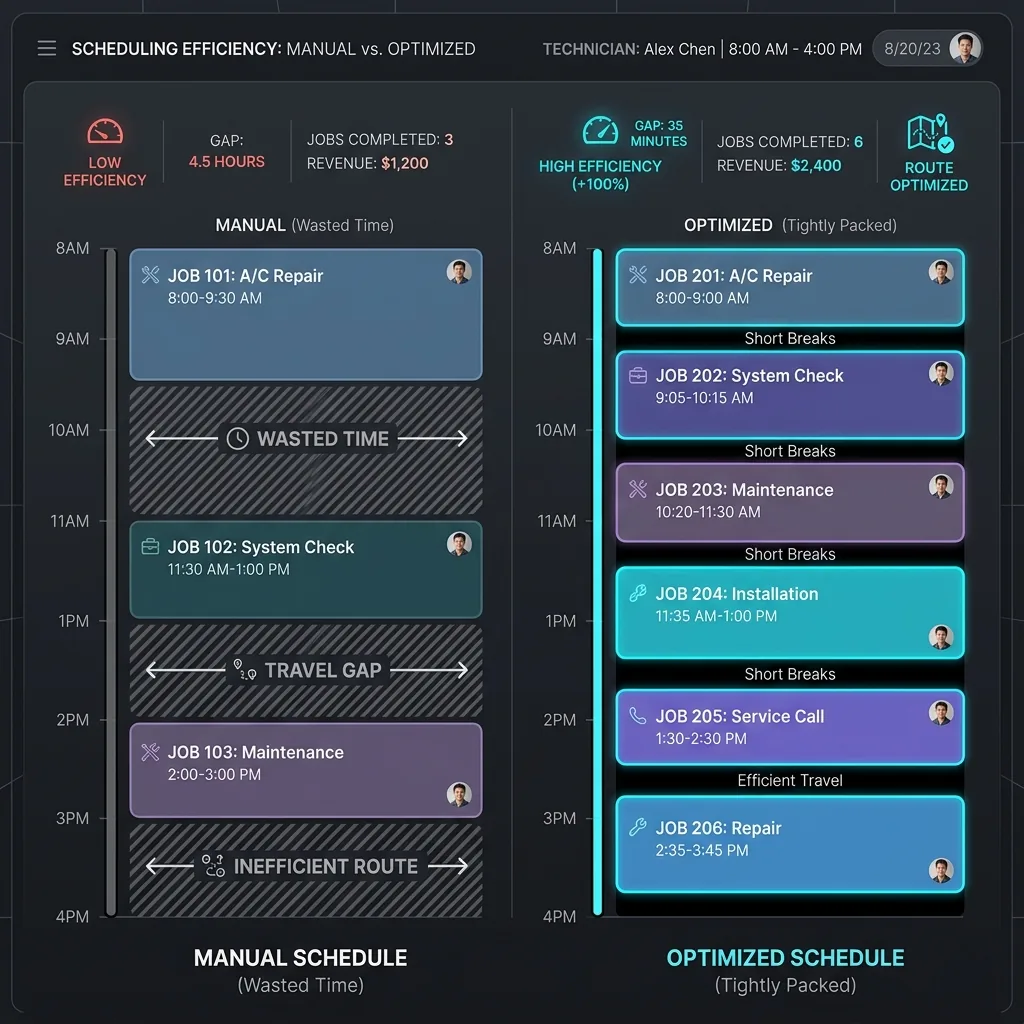
For a 5-tech team, that's an additional $366,000/year in revenue from the same headcount.
Implementation Guide
1. Import your team - Add technicians with their skills, certifications, and service areas.
2. Set up job types - Define your job categories with required skills and estimated durations.
3. Enable AI routing - Turn on intelligent dispatch and let the algorithm optimize from day one.
Chillead's dispatch board includes drag-and-drop scheduling, real-time GPS tracking, and AI-optimized routing with usage-based pricing.