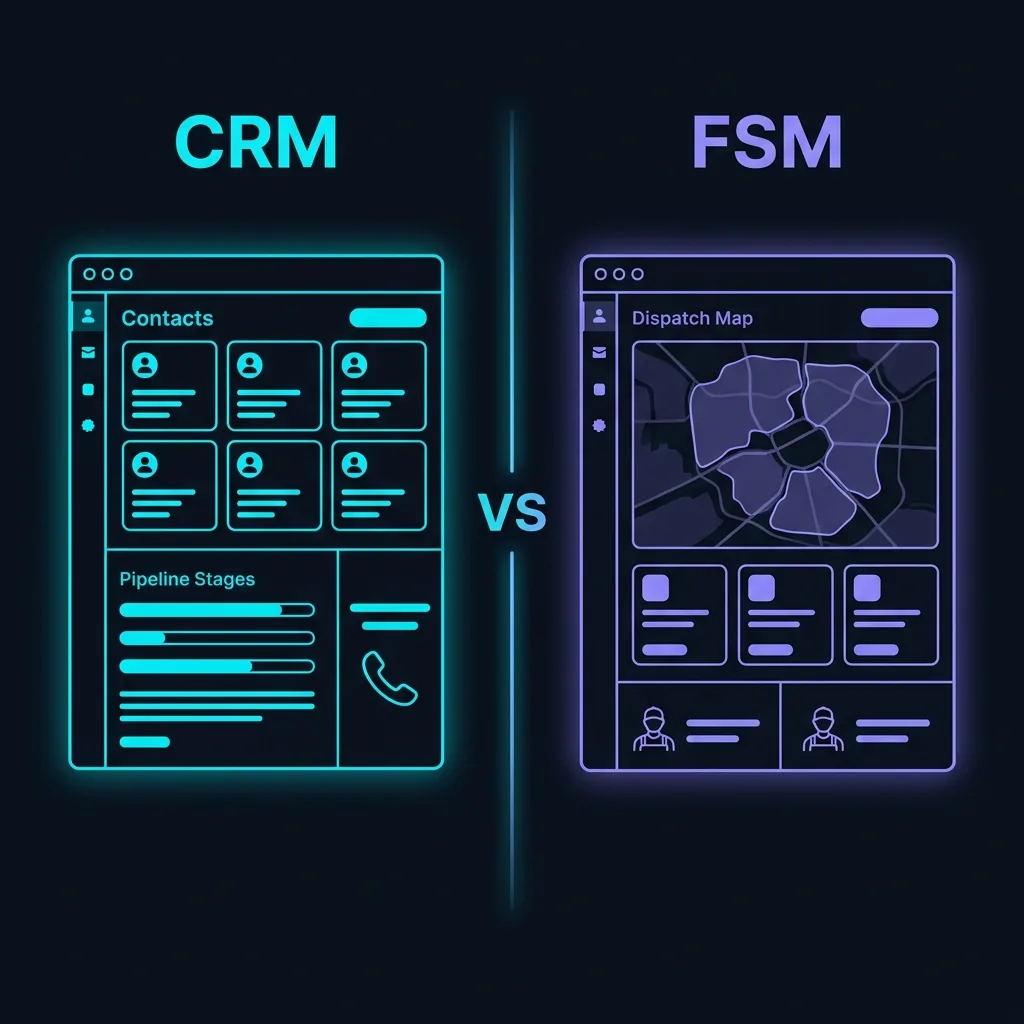
CRM manages customers, leads, and sales pipelines. FSM manages dispatch, scheduling, and field operations. Service businesses need both. Chillead combines them into a single system, eliminating data silos.
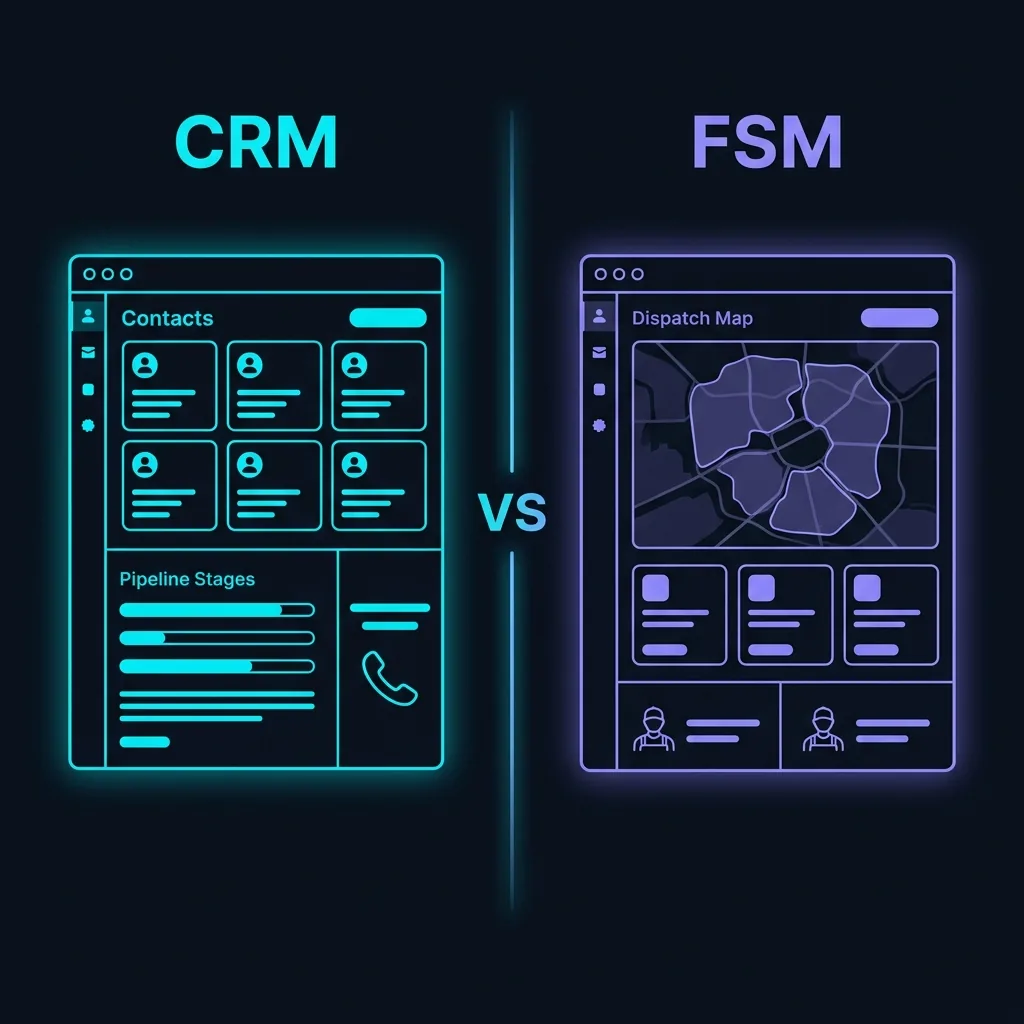
If you run a service business, you have probably heard both "CRM" and "field service management software" recommended. They sound similar, but they solve fundamentally different problems.
## What Is a CRM?
CRM software manages the sales side of your business: contact management, pipeline tracking, lead scoring, follow-up automation, and revenue reporting.
> Note: Tools like HubSpot CRM and Salesforce are the most widely used standalone CRM platforms. They excel at pipeline management but are not built for field dispatch or job management.
## What Is Field Service Management Software?
FSM software manages the operational side: dispatch and scheduling, work order management, mobile field app, invoicing, and GPS tracking.
## Key Differences Between CRM and FSM
| Capability | CRM | FSM | All-in-One (Chillead) |
|---|---|---|---|
| Contact management | ✓ | Basic | ✓ |
| Sales pipeline | ✓ | ✗ | ✓ |
| Lead scoring | ✓ | ✗ | ✓ |
| Dispatch board | ✗ | ✓ | ✓ |
| Field tech app | ✗ | ✓ | ✓ |
| Invoicing | ✗ | ✓ | ✓ |
| Auto-dialer | Rare | ✗ | ✓ |
Why You Need a Dedicated CRM for Service Businesses
Many service companies mistakenly believe that if they have dispatch software (FSM), they don't need a CRM. However, FSM tools are built around *jobs*, while a CRM is built around *people*.
A dedicated CRM for service businesses provides unique advantages:
- Lead Pipeline Management: Track a prospect from "Requested Quote" to "Estimate Sent" to "Won" or "Lost." FSM tools typically only care once the job is booked.
- Automated Sales Follow-ups: A CRM can automatically email a customer 48 hours after they receive an estimate but haven't accepted it yet.
- Lost Deal Nurturing: If a customer goes with a competitor, a CRM can automatically reach back out in 11 months right before their system needs annual maintenance.
Because service work relies heavily on speed-to-lead and recurring relationships, generic CRMs (like Salesforce or HubSpot) are often too bloated. Service companies need a CRM built specifically for high-velocity, local service sales. See our breakdown of how a CRM with auto dialer closes the speed-to-lead gap.
The All-in-One Solution
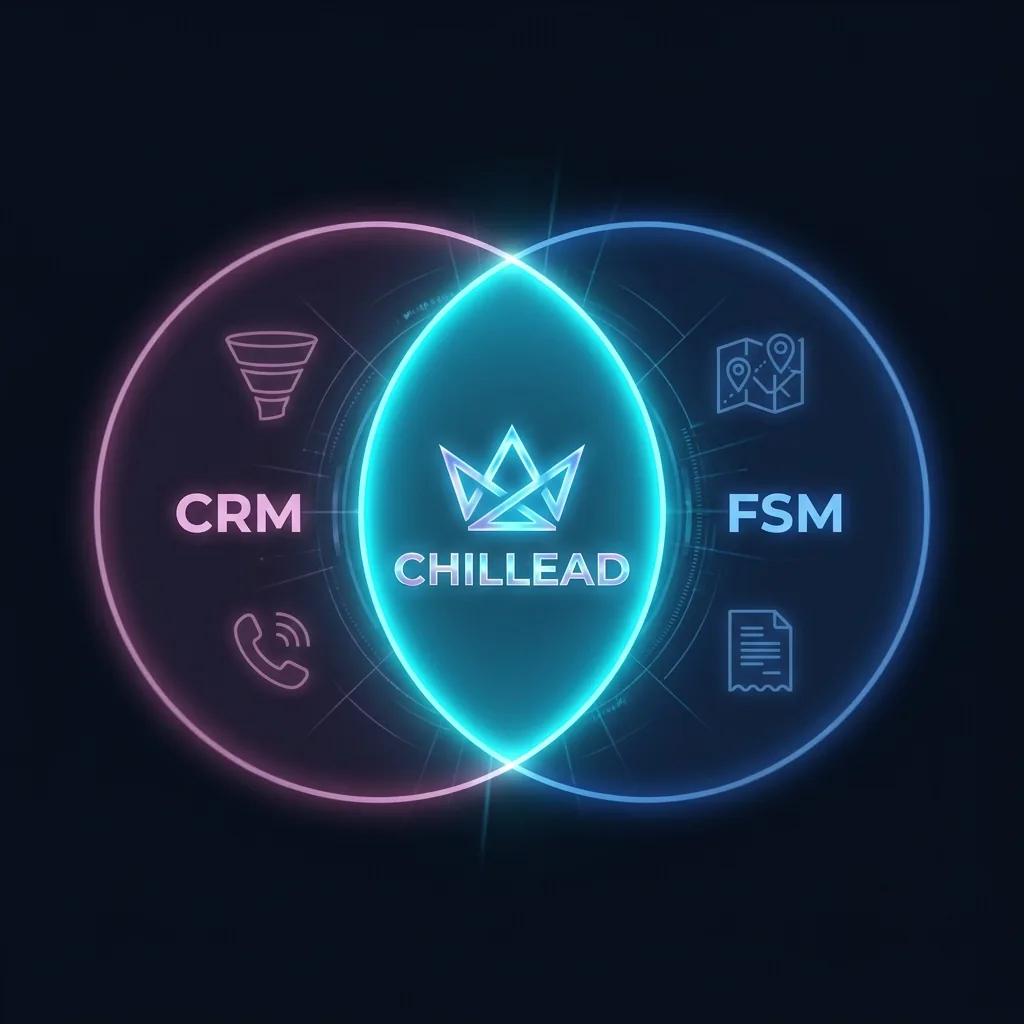
Platforms like Chillead combine CRM and FSM into a single system. When a sales rep closes a deal, the job automatically appears on the dispatch board. When a technician completes a job, the CRM record is updated. No double entry. No data silos.
All-in-one platforms eliminate the "integration tax" that service businesses pay when using 3-5 separate tools. One login, one database, one source of truth. For a deeper look at how automation ties these systems together, read our field service automation guide.